HIPAA and Data Sharing Resharing Both For Digital
admin
Jan 28, 2019
 3 min Read
 Shares
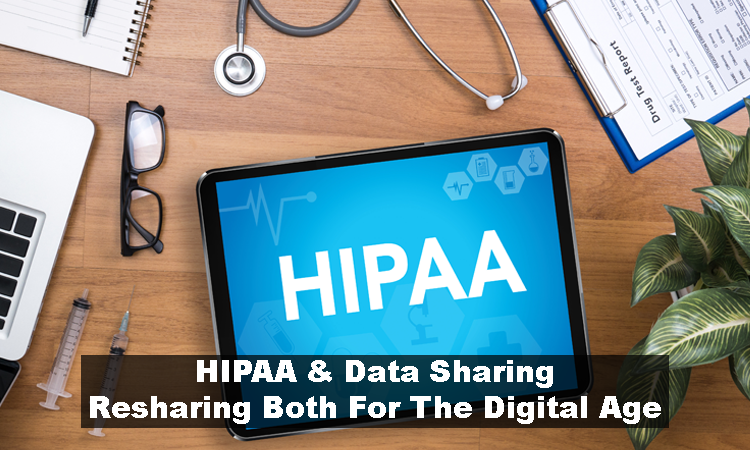
Understanding the costs that are linked with delivering great service levels in the IT industry is extremely important in the healthcare industry today. Among all aspects of the IT industry, data security probably ranks as #1 in the priority list. The simplest way to keep your data safe in the IT industry is by following HIPAA compliance – The Health Insurance Portability and Accountability act sets the standard for sensitive patient data protection and ensures that companies which have protected health information secure their physical network and keep all possible security measure.
Any entity that provides treatment, payment or any form of operation in healthcare have to meet this compliance as a mandate in the USA. Over the last few years, we have seen how cyber security has been the strongest point of threat for several businesses and any form of leakage or damage can be critical. It can in fact bring the entire business down permanently.
What are the right measures you can take to protect data?
The information that you possess are stored as emails, databases, library files etc and can there maybe several data access points for this. The biggest threat lies in the fact that this data is to be backed up and stored. Now, most of these companies do not protect their SaaS data with a backup or a recovery solution leaving them prone to troubles in case of a server failure or hacking or even malware. This is a huge threat – as the data can be hacked into easily.
When you follow HIPAA compliance– you are completely sure of having this data protected by having your data backed up. Some of the most common practices to follow in HIPAA certification are
- Create policies on using and accessing workstations, electronic media as well as data access points.
- Having a policy in place to ensure there are restrictions for transferring, deleting or adding data using any form of electronic media.
- Ensuring there is no transferable data devices that could be used in the premises.
- Having access control lines across the floor as well as towards the data that is present via the network.
- Enabling unique user Ids, emergency access procedures, auto log off sessions, encryption and decryption of data.
- Tracking those who access was granted to and random checks of the details looked at. Auditing or tracking logs on hardware as well as software platforms.
It is also mandatory to have integrity controls and measures to make sure that the data is destroyed. Having an IT disaster recovery team will ensure that any failures this kind can be rectified immediately and that patient health information is recovered accurately. Many outsourcing companies put these compliances as a mandate for all their projects as a security guideline. So, if you are in the space that looks at getting work from corridors in the healthcare industry, it makes perfect sense to have this compliance instilled in your organisation.
Audit-Ready PCI DSS
Don’t risk fines. Let our QSA team guide your certification process smoothly.
Request Consultation NDA Available
Popular Articles


Other Blogs
 Previous

 Blog
ISO/IEC 27701:2025 Transition: What Organizations Need to Know
ISO/IEC 27701 has entered a new phase. Published on 14 October 2025, ISO/IEC 27701:2025 replaces…
Read More Blog
PCI KMO Standard v1.0: What It Means for Payment Security
Learn what PCI KMO Standard v1.0 covers, who it affects, how it supports PIN and…
Read More Blog
Firewall Ruleset Review: What Your Rules Are Really Allowing
Every firewall does exactly what its rules tell it to do - nothing more. A…
Read More Blog
CEA Cyber Security Regulations 2026: Compliance Guide
The Central Electricity Authority (Cyber Security in Power Sector) Regulations, 2026 create an auditable cyber…
Read More Blog
Incident Response Planning for Regulated Entities in India
Every regulated entity has an incident response plan. It sits in a policy document, usually…
Read More Blog
AI Governance and Compliance in Indian Financial Services
Indian banks, NBFCs, and insurance companies are deploying AI across credit scoring, fraud detection, customer…
Read More Blog
FAQ: Cloud Compliance Questions From Fintech CTOs
Any cloud provider with data center regions in India - AWS (Mumbai and Hyderabad), Azure…
Read More Blog
RBI Cybersecurity Directions 2026: A Complete Compliance Guide
RBI's approach to cybersecurity regulation has evolved from advisory circulars to mandatory directions. The regulatory…
Read MoreReady to become compliant?
Talk to QRC to understand your scope, close gaps, and move confidently
toward validation readiness.