Cybersecurity Challenges using IoT / IoMT Health
admin
Nov 19, 2020
 5 min Read
 Shares
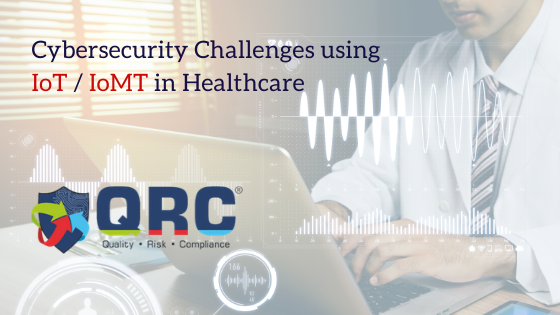
The healthcare industry has seen rapid changes in the past few years, especially with the advent of IoT devices that have been evolving at a faster pace. We have seen considerable development, even having a long way to go. The pandemic fueled rapid adoption, revealing the vulnerabilities, and inefficiencies in this sector.
While major IoT healthcare initiatives currently revolve around telemedicine and remote monitoring, the upcoming phase had a broader scope like tracking, monitoring and maintaining medical equipment and healthcare assets etc. Applications like personal healthcare, biosensors, smart beds, smart pills, the health insurance industry, robotics, and other specializations have just expanded the scope of IoT, and we haven’t talked about the pharma industry yet.
Benefits of IoT Healthcare
The ongoing pandemic clearly paved the way for faster adoption of the IoT devices and tele healthcare services. The key advantages of having IoT in healthcare are :
- Medical Mobility : When more patients need urgent assistance, it becomes necessary for the medical staff to track and maintain records of even hundreds of patients, serving in real time. IoT helps in tracking and getting alert when any critical change in a patient’s parameter occurs, aiding in locating and providing direct assistance asap.
- Patient Data Processing : Medical professionals tend to spend hours processing different kinds of medical information, Coupled with ML, IoT can excessively reduce these efforts to a few minutes, additionally offering possible treatment options.
- Enhanced preventive medicine, by better understanding conditions (courtesy of IoT data) and providing timely diagnosis without awaiting for obvious symptoms.
- Mass reduction in risk of error and miscalculation due to human factors.
- Medical Apps for monitoring critical health issues, aid healthcare professionals in finding out whether the patient has taken the prescribed medication else, the therapists can call and remind a patient. The whole process can be automated.
- Under secure practices,the personal data can be directly transferred to the doctor, maintaining confidentiality, as the information is moved from one device to another.
The IoT devices collect and transfer health data like the blood pressure, oxygen and blood sugar levels, weight, and ECG readings etc. With the increase in consumer engagements and consciousness regarding their health and better quality of life, there is a surging demand for remote healthcare services aiming to provide a better quality of life. While industries are approaching to provide a more integrated and IoT enabled healthcare solution, these industries have their own set of challenges, a larger amount of which is considering the security threat and privacy challenges.
IoT / IoMT Threats and security challenges
With the increasing market share of the IoT devices in the healthcare field, it has offered a simple door for cyber criminals trying to misuse and profit from device vulnerabilities. Ransomware tops the list of cyberthreats for healthcare organizations.
IoT Device security challenge
The IoT concerns a wide range of modules like the data acquisition,communication, sensors etc. Owing to the lack of consideration of cybersecurity threats, they have an inherent technical debt which results in compromised medical devices with unpredictable behavior.
Network Segmentation
Most of the healthcare organizations lack network segmentation and access control of IoT, owing to this any new device introduced will have global organization access, especially to lateral moving sensitive patient information in the network channels. Lack of NATing, allows a IoT device with default configurations to be discover able on the internet.
Use of Legacy systems
Legacy systems cannot be patched or updated as this interferes with the provision of patient care that’s essential 24/7. As these systems are devoid of any new security updates, they greatly facilitate the work of attackers in formulating IoT security breaches,
Mediajacking
Security threats that are owing to the implementation of malicious media to gain access to the medical device fall under the category of media jacking. Once the software is accessed, the attacker can vary the injection quantity to potentially cause lethal damage to the patient, additionally stealing confidential information.
User Impersonation
IoT devices capture data in real time and are a treasure trove of patient data for cybercriminals. Most of the devices lack a data protocol or standard, also the use of open source softwares. The data can be misused to create fake ID using the sensitive information like medical history and social security number, to buy drugs or equipments to sell later or file a fraudulent insurance claim
For any IoT device or environment implementation, apart from side-channel attacks, following are the key vulnerable areas in IoT device :
- Traffic Interception
Use of legacy systems and network segmentation increase the chances of data drain of confidential data from a secure network while transmitting information to a healthcare’s IoT system. - Debug Port
Physical devices essentially come with a debug port used for development or debugging purposes. But they can also provide access to attackers to read, high jack or modify the firmware. - Authentication and Authorization
Secure authentication and authorization mechanisms are necessary to ensure the protection of data against any hacking attempts.Most of the IoT devices come with a device with a default password, which are necessary to be updated to avoid ease of access to malicious hackers.
Considering security as an ‘add-on’ feature in device acquisition
Most of the activities in the device acquisition and implementation phase consider security just an add-on feature, leading to an increase in the risk of human error and poor system configuration. Even the unregulated practice of BYOD, especially by physicians belonging to independent medical groups.
Security concerns while developing IoT apps
While lightweight, developer friendly APIs are the need of the hour, the advent of IoT devices has brought a whole new challenge for IoT security developers. The following are few risks associated with the IoT app development, seen over recent years.
Audit-Ready PCI DSS
Don’t risk fines. Let our QSA team guide your certification process smoothly.
Request Consultation NDA Available
Popular Articles


Other Blogs
 Previous

 Blog
ISO/IEC 27701:2025 Transition: What Organizations Need to Know
ISO/IEC 27701 has entered a new phase. Published on 14 October 2025, ISO/IEC 27701:2025 replaces…
Read More Blog
PCI KMO Standard v1.0: What It Means for Payment Security
Learn what PCI KMO Standard v1.0 covers, who it affects, how it supports PIN and…
Read More Blog
Firewall Ruleset Review: What Your Rules Are Really Allowing
Every firewall does exactly what its rules tell it to do - nothing more. A…
Read More Blog
CEA Cyber Security Regulations 2026: Compliance Guide
The Central Electricity Authority (Cyber Security in Power Sector) Regulations, 2026 create an auditable cyber…
Read More Blog
Incident Response Planning for Regulated Entities in India
Every regulated entity has an incident response plan. It sits in a policy document, usually…
Read More Blog
AI Governance and Compliance in Indian Financial Services
Indian banks, NBFCs, and insurance companies are deploying AI across credit scoring, fraud detection, customer…
Read More Blog
FAQ: Cloud Compliance Questions From Fintech CTOs
Any cloud provider with data center regions in India - AWS (Mumbai and Hyderabad), Azure…
Read More Blog
RBI Cybersecurity Directions 2026: A Complete Compliance Guide
RBI's approach to cybersecurity regulation has evolved from advisory circulars to mandatory directions. The regulatory…
Read MoreReady to become compliant?
Talk to QRC to understand your scope, close gaps, and move confidently
toward validation readiness.