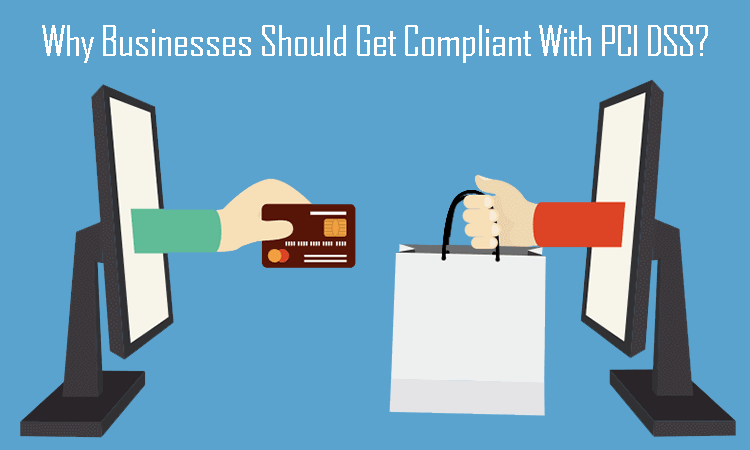
Why Businesses Should Get Compliant With PCI DSS?

Over the last few years, ‘data breach’ has been one of the most fearful phrases in the payment industry. We have seen the effect of data breaches time and again over the years, and how it can bring a company down to its knees. In fact, Target’s 2013 data breach is still whispered with fear thanks to contact details of over 70 million customers being hacked. As it was back then and now, the simple question remains – why did it happen and what can be done to ensure it does not happen again?

In the simplest sense, the lack of security or compliance of required security says it all. Over time, experts too have pointed out that a stringent compliance has to be in place when it comes to data security. The answer is PCI DSS. These security standards helps facilitate consistent and remarkable security.

How does PCI DSS compliance help?

Quite simply, having a compliance like payment card industry data security standard will ensure that you have improved controls to reduce payment method frauds. The compliance levels stems right from the storage and the encryption of the credit cardholder, irrespective of the transaction size. How does this help? Well, it protects your company from a breach of data. A  PCI DSS Compliance India  would help your company rise up to the next level because –

A confident customer is a customer forever : Giving your customer the confidence that their data is completely safe on your platform is going to be the foundation for years to come. It is essential to keep your business running and to keep the transactional model flowing.

Keeping your data secure : Information of your company employees, clients and business payment methods, is undoubtedly the most important asset to any organisation. The risk of malpractice can be devastating – so can unauthorized access or hacking. When you have a  PCI DSS consultant  in your team, you can protect this data from any form of access. Not only does that become the strength of your business, but it also protects the value of transaction.

Keeping ahead of the game : Having a standard of this kind implemented in your business keeps you way ahead of the possible threats ahead. It is not only the payment methods or data that you are keeping safe, but you are looking ahead of further possible threats that may be in the way for your business. It gives you that additional push to focus on everything else your business needs to thrive on and will be the driving force to your higher growth. Plus, such a compliance is tailor made for your business as it cannot be implemented with one business model in mind – the specific rules that apply to your industry and business model are unique a massive advantage in today’s game.
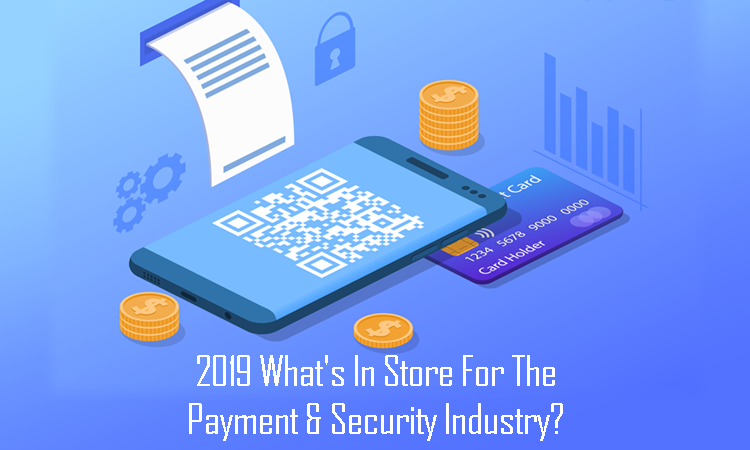
2019 What’s In Store For The Payment And Security

As we close out the year of 2018, we have to recognise the year gone by as one that brought us closer to existing threats and using technology to counter them. Many industry experts look at many of the fin-tech companies to evolve and reshape the payments landscape in 2019. Rightly so too, keeping these points to expect –

Cyber security is more important than ever

It has been professed that the next World War would be battled out in Cyber space and it seems to be a safe statement to go by. There have been several major leaks of biometric-based data around the world over the last year. Thus, creating a calling for more secure methods of identification and authentication across financial institutions. Access to biometric data could expose pass-codes, touch ID and facial recognitions. Stronger encryption of this data across payment methods are expected to be the biggest change in 2019. In fact, many  payment security specialists  see it as the largest kill upgrade to make.

Faster payment methods

Many expect the following year to bring about faster or real-time payment techniques, with organizations like QRC supporting secure implementations. Of course, these would come by the bigger players in the market since it would require significant investments too improve capabilities in every function department.

Raising the skill- bar

Upscaling in very department would be a mandate. More professionals in the industry would have to acquire deep understanding skills of transactional security – very similar to the  PCI certification  requirements that are expected.

Focusing on service

The past couple of years was heavily driven by the force of Cryptocurrencies and transactions at the point of sale. 2019 is going to be driven harder on tokenisation and with the intent to make transaction safer and easier. The goal would be to expand the payment options at hand for the consumer and the merchants along with reducing processing fees. This would impact on higher revenue and therefore bring a need for better experiences and services – closing this gap is going to be of utmost importance for many companies in the fintech space.

Read more about this: Cybersecurity Compliance and e-Rupee: Need for Strong Measures

The rise of the file-less malware

Everyone has been harping on this for the last few years and we see it to be a differentiator this year too. There has been a consistent rise with file-less malware and many organisations are not equipped to deal with such risks. With this compromise, it is even harder to defend your organisation from such an attack. The rush to prevent may prove to be a first-mover advantage.

AI could go rogue

We all saw the Will Smith starrer ‘A.I’ and never believed it could happen. Well, hold that thought. There’s an obvious threat coming from malicious chat bots that can push you to clicking links or even sharing personal information. Of course, we have seen huge steps of growth in machine learning techniques over the years and even though chat bots do provide to be a helpful layer in customer experience, it can also lead to be an easy way for hackers to hijack the entire system. In the simplest example, imagine a fake chat bot app on your banking website – all hell could break loose. 2019 is going to be the year to block this divide and ensure a safer transactional experience.