Category: ISO/IEC 27001
ISO 27001:2022 Post-Transition: What Happens to Your ISMS Now
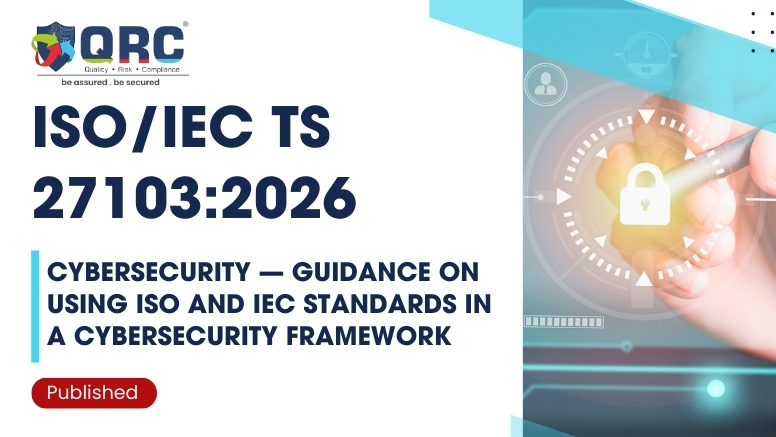
ISO/IEC TS 27103:2026 – Bridging Cybersecurity Frameworks
The cybersecurity landscape is evolving at a relentless pace. Organizations across every sector — government, finance, healthcare, critical infrastructure — are scrambling to build and mature their cybersecurity programs. But here’s the challenge: there’s no shortage of frameworks, standards, and guidelines out there. The real question is how to connect the dots between a high-level cybersecurity framework and the detailed, battle-tested standards that tell you how to actually implement it.
That’s exactly what ISO/IEC TS 27103:2026 sets out to solve.
Published in February 2026 as the first edition Technical Specification (replacing the earlier ISO/IEC TR 27103:2018 Technical Report), this document provides practical guidance on how organizations can leverage existing ISO and IEC standards within a cybersecurity framework. It’s been updated to align with ISO/IEC 27002:2022, making it current with today’s best-practice controls landscape.
Why This Document Matters
Most cybersecurity frameworks — whether it’s NIST CSF, national guidelines, or industry-specific models — organize their guidance around a set of high-level functions. ISO/IEC TS 27103 takes this universal structure and maps it directly to specific ISO/IEC standards and clauses that organizations can use for implementation. Think of it as a Rosetta Stone: on one side, you have your framework’s desired outcomes on the other, you have the exact standards and sections that help you achieve those outcomes. This eliminates the guesswork and helps security teams, auditors, and executives speak a common language.
The document also makes a compelling case for a risk-based approach to cybersecurity. Rather than a one-size-fits-all compliance checklist, a risk-based approach lets organizations prioritize investments based on their actual threat landscape, business context, and resource constraints. It’s flexible, outcome-focused, and designed to scale across industries and organizational sizes.
The Five Core Functions
At its heart, ISO/IEC TS 27103 organizes cybersecurity activities around five concurrent and continuous functions. These will look familiar to anyone who has worked with major cybersecurity frameworks:
- Identify — Developing organizational understanding of cybersecurity risk to systems, assets, data, and capabilities. This is the foundation: understanding what you have, what matters most, and where the risks lie. Categories here include business environment, risk assessment, risk management strategy, governance, and asset management.
- Protect — Implementing appropriate safeguards to ensure delivery of critical services and limit the impact of potential events. This covers access control, awareness and training, data security, information protection processes, maintenance, and protective technology.
- Detect — Identifying the occurrence of cybersecurity events in a timely fashion. Activities here span anomalies and events detection, security continuous monitoring, and detection processes.
- Respond — Taking action regarding a detected cybersecurity event. This includes response planning, communications, analysis, mitigation, and post-event improvements.
- Recover — Maintaining plans for resilience and restoring capabilities or services impaired by a cybersecurity event. This encompasses recovery planning, communications, and incorporating lessons learned.
These five functions align directly with the cybersecurity concept attributes in ISO/IEC 27002:2022, providing a natural bridge between framework-level thinking and control-level implementation.
The Standards Mapping — Where the Real Value Lives
This level of granularity is what makes the document genuinely useful for practitioners. Instead of staring at a framework outcome like “data at rest is protected” and wondering where to start, you get a direct pointer to the relevant standard and clause number.
The key standards that appear most frequently across the mapping include ISO/IEC 27001:2022 (ISMS requirements), ISO/IEC 27002:2022 (information security controls), ISO/IEC 27035 series (incident management), ISO/IEC 27033 series (network security), ISO/IEC 27036 series (supplier relationships), ISO/IEC 20243-1:2023 (trusted technology providers), and ISO/IEC 27019:2024 (energy utility industry controls).
Three Principles for Top Management
Annex B introduces a complementary perspective drawn from the Cybersecurity Management Guidelines for Japanese Enterprise Executives (Version 3.0). It distills cybersecurity governance into three high-level principles for leadership:
- First, top management is expected to drive cybersecurity measures, considering the broader risks that accompany IT utilization.
- Second, comprehensive security measures are needed across the entire business ecosystem — the organization itself, its group companies, business partners, and supply chain.
- Third, the company should maintain suitable communications with relevant parties, including regular disclosure of security measures and incident reporting.
Annex B also outlines ten essentials of cybersecurity management, each mapped to supporting standards from the ISO/IEC 27001 and 27002 families. These range from ensuring leadership awareness and building internal processes, to determining goals based on risk knowledge, establishing PDCA frameworks, managing supply chain security, ensuring adequate resources, managing IT outsourcing scope, participating in information sharing, developing emergency response systems, and preparing post-incident communication materials.
Who Should Read This?
ISO/IEC TS 27103:2026 is relevant to a broad audience. CISOs and security leaders will find the framework-to-standards mapping invaluable for building or maturing their cybersecurity programs. GRC and compliance teams can use it to demonstrate alignment between organizational frameworks and international standards. Auditors and assessors gain a reference for evaluating whether an organization’s cybersecurity posture is backed by recognized best practices. And executives and board members benefit from the high-level principles in Annex B, which translate cybersecurity governance into business language.
The Bottom Line : Cybersecurity frameworks are powerful tools for organizing and communicating risk management strategy. But a framework without implementation guidance is just a wishlist. ISO/IEC TS 27103:2026 closes that gap by providing a clear, structured mapping from framework functions to the ISO/IEC standards that tell you how to get the job done.
If your organization is adopting or refining a cybersecurity framework — or if you’re trying to demonstrate how your existing ISO 27001 ISMS aligns with broader cybersecurity objectives — this document deserves a place in your reference library.
ISO/IEC TS 27103:2026, “Cybersecurity — Guidance on using ISO and IEC standards in a cybersecurity framework,” is published by the International Organization for Standardization (ISO) and the International Electrotechnical Commission (IEC). It was prepared by Joint Technical Committee ISO/IEC JTC 1, Subcommittee SC 27, Information security, cybersecurity and privacy protection.
Strengthening Cybersecurity Culture: Boosting Compliance
In the digital age, where data is the lifeblood of organizations and cyber threats loom at every corner, building a robust cybersecurity culture is no longer a choice but a necessity. A strong cybersecurity culture not only promotes compliance with regulations but also safeguards sensitive data, instills confidence in stakeholders, and ultimately fortifies the organization against cyber threats. In this blog, we will explore strategies for organizations to cultivate a cybersecurity culture that fosters compliance and data protection.
- Leadership and Accountability : Lead by Example
Creating a cybersecurity culture starts at the top. Leadership should champion cybersecurity initiatives and demonstrate a commitment to compliance and data protection. Leaders should set the tone, allocate resources, and establish clear accountability for cybersecurity within the organization. - Employee Training and Awareness: Knowledge is Power
Empower your employees with the knowledge and skills to recognize and mitigate cyber threats. Regular training sessions and awareness campaigns can help employees understand the importance of cybersecurity and their role in protecting sensitive information. Cybersecurity education should be an ongoing process to keep employees updated on the latest threats and best practices. - Clear Policies and Procedures: The Roadmap to Compliance
Establish clear and comprehensive cybersecurity policies and procedures. These documents should outline the organization’s approach to data protection, incident response, and compliance with industry regulations. Employees should have easy access to these policies and understand their roles and responsibilities. - Risk Assessment and Management: Identify Weaknesses
Regularly assess your organization’s cybersecurity risks and vulnerabilities. Identify weak points in your systems and processes, and prioritize efforts to mitigate them. By understanding potential threats, you can proactively address them before they turn into breaches. - Incident Response Plan: Be Prepared
No organization is immune to cyber incidents. Having a well-defined incident response plan in place is essential. This plan should outline how to react to security breaches, who to contact, and the steps to contain, investigate, and recover from an incident. Practice drills and scenarios to ensure your team is prepared when a real incident occurs. - Technology and Tools: Invest Wisely
Use cutting-edge cybersecurity technologies and tools to protect your data. Firewalls, intrusion detection systems, encryption, and security software can help safeguard your organization’s digital assets. Regularly update and patch your systems to defend against the latest threats. - Third-Party Vendors: Extend the Culture
If your organization works with third-party vendors, ensure they adhere to the same cybersecurity culture and standards. Conduct due diligence to assess their security measures and compliance, as they can also pose a risk to your organization. - Continuous Improvement: Evolve with the Threat Landscape
Cybersecurity is an ever-evolving field. Organizations should stay informed about the latest cyber threats and adjust their strategies accordingly. Regularly review and update cybersecurity policies and procedures to align with the changing threat landscape. - Monitoring and Compliance Reporting: Measure Progress
Implement monitoring systems to track compliance with cybersecurity policies and regulations. Regularly report on compliance status to leadership and stakeholders. This transparency helps maintain accountability and ensures that cybersecurity remains a priority. - Culture of Reporting: Encourage Communication
Create a culture where employees feel comfortable reporting security incidents or potential vulnerabilities without fear of reprisal. Early detection and reporting are critical in preventing data breaches.
In conclusion, building a strong cybersecurity culture is not a one-time effort it’s an ongoing commitment to protecting your organization’s data and reputation. By fostering a culture of cybersecurity awareness, investing in employee training, and staying updated with the latest threats and best practices, organizations can promote compliance, data protection, and resilience in the face of cyber threats. It’s a shared responsibility that can make all the difference in today’s digital landscape.
Understanding the Relationship between ISO 27001 and ISO 27701
- Risk Assessment and Management: Identifying risks related to information security and implementing measures to mitigate these risks effectively.
- Policy Development: Creating a comprehensive set of policies and procedures to guide information security efforts across the organization.
- Continuous Improvement: Regularly reviewing and updating security measures to adapt to evolving threats and technologies.
- Privacy Risk Assessment: Identifying and assessing privacy-related risks to personal data, allowing for targeted risk management strategies.
- Data Protection Measures: Implementing appropriate measures to protect personal data from unauthorized access, disclosure, alteration, and destruction.
- Compliance with Privacy Laws: Ensuring compliance with relevant privacy laws and regulations to maintain the privacy rights of individuals.
- The integration enables organizations to address both information security and privacy in a comprehensive manner within a single management system. By combining the strengths of both standards, organizations can achieve a more robust and all-encompassing approach to managing their information assets.
- ISO 27701 extends the ISMS framework to include privacy considerations seamlessly. While ISO 27001 primarily focuses on securing information, ISO 27701 adds the essential dimension of privacy, ensuring that personal data is handled and protected in accordance with applicable privacy laws and best practices.
- Enhanced Risk Management and Compliance: The integration of both standards allows for a more comprehensive understanding and management of risks related to both information security and privacy. Organizations can comply with multiple regulatory requirements, enhancing overall risk management practices.
- Alignment with Global Data Privacy Regulations: ISO 27701 assists organizations in aligning their practices with various data privacy regulations such as the GDPR, CCPA, and others. This alignment is critical for organizations that operate globally and need to adhere to diverse legal frameworks.
- Demonstrated Commitment to Information Security and Privacy: Implementing both standards showcases an organization’s commitment to safeguarding both information and privacy, instilling trust and confidence among stakeholders, clients, and customers.
- Integrated Approach: Ensure a cohesive implementation of both standards by aligning the privacy objectives and controls with the existing ISMS structure.
- Collaboration and Training: Encourage collaboration between information security and privacy teams to achieve a harmonized approach. Provide training to employees to understand and implement the integrated framework effectively.
- Regular Audits and Updates: Conduct regular audits to assess the performance of the integrated management system and make necessary updates to adapt to changing requirements and risks.
Cybersecurity Compliance and e-Rupee: Need for Strong Measures
With the rise of digitalization, the world has witnessed a transformation in the way transactions are conducted. From traditional banking systems to digital payment options, technology has made our lives easier and more convenient. The advent of digital currencies and blockchain technology has revolutionized the financial world. Digital currencies have gained immense popularity in recent times, and governments around the world are exploring the possibilities of creating their digital currencies. In India, the Reserve Bank of India (RBI) is reportedly working on creating a digital version of the Indian Rupee, which is commonly referred to as the “Digital Rupee.”
RBI has launched a pilot for its retail-based central bank digital currency (CBDC), the e₹-R, as of December 1, 2022. This digital token holds the same value as legal tender and is distributed in the same denominations as paper currency. The banks act as financial intermediaries in distributing the e₹-R, and users can transact with it through a digital wallet provided by participating banks. These transactions can be made between individuals (P2P) or between individuals and merchants (P2M). The e₹-R offers the same trusted, safe, and final settlement features as physical cash, but like cash, it does not earn interest and can be converted to other forms of money such as bank deposits.
However, the increasing use of digital currencies and the implementation of the Digital Rupee come with several challenges, particularly when it comes to cybersecurity. The central bank has emphasized the need for robust cybersecurity measures, as cyberattacks and frauds have become a major concern in the digital world.
These measures include :
- Compliance with Information Security Management Systems (ISMS) standards: Organizations involved in the creation and distribution of the Digital Rupee must comply with the ISMS standards set by the RBI.
- Regular security audits: Organizations must conduct regular security audits to identify any vulnerabilities and take appropriate measures to address them.
- Encryption technologies: Encryption technologies must be adopted to secure transactions and prevent data breaches.
- Use of multi-sig wallets: Organizations are encouraged to use multi-sig wallets, which allow multiple parties to sign a transaction, making it more secure and preventing unauthorized access.
- Cold storage: Organizations must store the Digital Rupee in cold storage, which involves storing the currency offline to prevent cyberattacks.
- Best practices: Organizations must follow the best practices laid down by the RBI to ensure the security of the Digital Rupee.
These guidelines and regulations ensure that the Digital Rupee remains secure and protected against cyber threats. The RBI’s commitment to ensuring the security of the Digital Rupee will play a crucial role in its success and widespread adoption.
Controls Guide for ISO 27001 – Part 2
This article is part of our ISO 27001 certification hub page, where we cover key concepts, requirements, and implementation steps for building a strong Information Security Management System. In this second part of the controls guide, we continue exploring ISO 27001 controls that help organizations manage security risks, improve compliance, and strengthen data protection practices.
What are the ISO 27001’s 14 domains?
In sections A.5 to A.18 of Annex A of ISO 27001, 14 “domains” are listed. The following is covered in the sections:
Annex A.5. Information Security Policies: Giving management guidance for information security policies is the goal of Annex A.5. The goal of this Annex is to manage information security guidance and support in accordance with the needs of the organisation and in compliance with applicable laws and regulations. Two controls are present in the Annex:
- A.5.1.1 Policies for Information Security – According to Annex A.5.1.1, a set of information security policies must be established, approved by management, published, and distributed to staff members and pertinent outside parties.
- A.5.1.2 Review of the Policies for Information Security – The information security policies must be evaluated on a regular basis or if significant changes take place, according to Annex A.5.1.2, to ensure that they continue to function in a stable, adequate, and efficient manner.
Annex A.6. Organization of Information Security:
- Annex A.6.1 is about the internal organization of information security. Establishing a management framework that starts and manages the application and operation of information security is the goal of this Annex.
- Annex A.6.1.1 Information Security Roles & Responsibilities specifies that each and every responsibility for information security must be identified and assigned. Responsibilities for information security might be generic (like protecting information) or specific (e.g. the responsibility for granting a particular permission).
Annex A.7. Human Resource Security:
- Annex A.7.1 is about employment and is concerned directly with human resources. Making sure that staff members are knowledgeable about their roles, well-trained, and qualified for them is the goal here. What transpires when people depart or switch responsibilities is also covered in this Annex. There are 6 controls in the Annex.
All job candidates are subjected to background checks and competence assessments. The obligations the employee and the organisation will both bear for adequate information security hygiene must be specifically stated in the contractual agreement signed by workers and contractors. The goal is to guarantee that workers and contractors understand and fulfil their information security obligations while on the job.
Annex A.8. Asset management:
Asset accountability is covered in Annex A.8.1. This Annex’s goal is to define and identify the information assets that are under the management system’s purview. They must also be given the proper protective obligations. There are 10 controls in the Annex. This Annex mandates the identification and management of all assets related to information processing facilities. Assets should be listed in a detailed inventory that outlines how they are handled and regulated.
Annex A.9. Access Control:
- Annex A.9.1 is about the business requirements of access control. This Annex control’s goal is to restrict access to information and information processing infrastructure. There are 14 controls in this Annex. This Annex requires that an access control policy be created, documented, and periodically evaluated while keeping the business needs for the assets in mind. Only the networks and network services that users actually need for their jobs should be granted access to users. All user types must have access rights to all systems and services, and a procedure must be put in place to grant or withdraw those rights.
Annex A.10. Cryptography:
- Annex A.10.1 is about Cryptographic controls. Here, protecting the confidentiality, authenticity, and/or integrity of information through the right and efficient use of cryptography is the goal. There are two controls in this Annex. A policy for the usage and security of cryptographic keys should be established in accordance with the criteria of this Annex. All stages of the keys’ life should be covered by this policy. Additionally, a procedure should be in place for the generation, transfer, modification, backup, and storage of cryptographic key material all the way up until its demise.
Annex A.11. Physical and environmental Security:
- Annex A.11.1 is about ensuring secure physical and environmental areas. Preventing illegal physical access, property damage, and interference with the organization’s information and information processing facilities is the goal of this Annex. There are 15 internal controls in total. For places that house either sensitive or crucial information, this Annex should include a thorough explanation of the security perimeters and bounds. This comprises locations with tools for information processing, such as computers, laptops, etc. To ensure that only authorized people are granted access, secure locations need to be safeguarded with the proper entry restrictions. Additionally covered by this Annex are operations interruptions and asset loss, damage, theft, or compromise.
Annex A.12. Operations security:
- Annex A.12.1 is about Operational Procedures and Responsibilities. This Annex’s goal is to guarantee the reliable and secure functioning of information processing facilities. There are 14 controls in all. Operating procedures shall be documented and made available to all users upon request in accordance with this Annex. Operating procedures that have been properly documented ensure that systems will function consistently even when additional personnel or resources are added. They are frequently essential for disaster recovery, business continuity, and when staff availability is jeopardized. Malware Defence is also covered in this Annex. The goal is to secure data centers and other information-processing infrastructure from malware intrusion.
Annex A.13. Communications security:
- Annex A.13.1 is about Network Security Management. This Annex’s goal is to guarantee the security of data in networks and the information processing facilities that enable them. There are 7 controls in this Annex. To safeguard the information included in systems and applications, networks must be monitored and under strict supervision. This means that the company needs to have procedures that guarantee the security of the data included in its systems and applications.
- Annex A.13.2 is about information transfer. This Annex’s goal is to protect the confidentiality of information shared within the company and with any outside party, such as a client, a supplier, or other interested parties.
Annex A.14. System Acquisition, Development and Maintenance:
- Annex A.14.1 is about security requirements of information systems. The goal is to make sure that throughout the lifecycle of information systems, sound information security procedures are maintained as a core component. This covers the specifications for information systems that offer services across open networks. There are 13 controls in this Annex. Any specifications for brand-new information systems or improvements to the current information systems must include information security-related requirements.
- Annex A.14.2 is about process security throughout development and support. This Annex’s goal is to make sure that information security is planned for and implemented throughout the information system development lifecycle.
Annex A.15. Supplier Relationships:
- Annex A.15.1 is about supplier relationships and information security. The goal is to safeguard the company’s priceless assets from suppliers who may have access to or influence them. This should also encompass other important relationships, such those with business partners. There are 5 controls in this Annex.
- Annex A.15.2 is about managing Supplier Service Development. This Annex’s goal is to make sure that, in accordance with supplier agreements, a certain degree of information security and service delivery is maintained.
Annex A.16. Information Security Incident Management:
- Annex A.16.1 is concerned with managing information security events, incidents, and weaknesses. The goal is to make sure that incidents, occurrences, and weaknesses are handled consistently and effectively throughout their lifecycle. There are 7 controls in this Annex. These controls outline how management must set up roles and processes to guarantee a prompt, efficient, and systematic response to flaws, events, and security incidents.
Annex A.17. Information Security Aspects of Business Continuity Management:
- Annex A.17.1 Continuity of Information Security is the topic. The goal is to integrate business continuity management systems for the firm with information security continuity. There are 4 controls in this Annex. The company must ascertain its particular needs for information security and consider how information security management will continue in difficult circumstances, such as during a crisis or tragedy.
Annex A.18. Compliance: Annex
- A.18.1 is about adhering to statutory and contractual obligations. The goal is to prevent violations of any security standards as well as of any legal, statutory, regulatory, or contractual duties linked to information security. There are 8 controls in this Annex.
- Annex A.18.2 is about evaluations of information security. The goal is to make sure information security is run in compliance with organizational rules and procedures.
When information like this seems overwhelming, knowledgeable cyber security companies like QRC may step in and help streamline the process. Organizations are not obligated to use all 114 of ISO 27001’s controls, as we previously discussed. It is merely a list of things that must be done in accordance with the risk assessment made by your firm. For you and your management team, the standard serves as a roadmap for establishing, putting into place, maintaining, and continuously enhancing an effective information security management system. With all of the aforementioned basic controls in place, you’ll have a smooth procedure that will assist your company in identifying and promptly mitigating possible hazards.
Read more about this: Advantages of ISO/IEC 27701:2019 certification
Controls Guide for ISO 27001 – Part 1
This article is part of our ISO 27001 compliance and certification hub page, created to help organizations understand the standard, its requirements, and its role in information security management. In this first part of the ISO 27001 controls guide, we explain the foundational controls that support risk management, data security, and a structured approach to protecting business-critical information.
An international standard called ISO/IEC 27001:2013 was developed to assist enterprises in managing the security procedures for their information assets. This standard offers a reliable framework for putting into place an ISMS, or Information Security Management System. Through its safe and efficient management procedures, this framework facilitates the Confidentiality, Integrity, and Availability of all crucial organizational data.
One of the most widely used and approved information security standards is ISO 27001. You can refer to our prior article for more information because we already covered everything you need to know about the ISO 27001 standard. The focus of this essay is on the ISO 27001 Audit Controls, nevertheless. The paper describes the ISO27001 Audit Controls in great detail.
What are the audit controls for ISO 27001?
There are two sections to the ISO 27001 Audit Control Standards.11 clauses, ranging from 0 to 10, make up the first section, which is the required element. 114 control objectives and controls are outlined in the second section, known as Annex A. The Introduction, Scope, Normative references, and Terms and Definitions of the ISO 27001 standard are covered in Clauses 0 to 3.
Any business that wants to be in compliance with the Standard must adhere to the ISO 27001 requirements listed in Clauses 4 through 10. The Standard’s Annex A provides a list of optional controls that are chosen as part of the Risk Management process to support these clauses and their requirements. 14 categories can be used to group the 114 controls in ISO 27001 Annex A, which we will explore below.
ISO/IEC 27001 Information Security Management Standard – Clauses 0 – 10
- Clause 0.1: Introduction – The knowledge needed to put up a successful Information Security Management System is provided by the ISO 27001 Standard. This system provides an overview of how the standard implementation safeguards your data from unauthorized users, complies with numerous national and international compliance standards, and inspires confidence in stakeholders and clients as a reliable business.
- Clause 1: Scope – According to this clause, your organization’s context must be considered when applying the ISO 27001 standard’s specifications. So it’s crucial to understand your organizational setting. This prevents you from overworking your system and attempting to accomplish goals that are unnecessary. It is stated again in the provision that your ISMS must apply risk management procedures. It also demonstrates how this norm applies to businesses of all sizes.
- Clause 2: Normative references – This Clause exists to indicate that application of ISO 27001 requires ISO 27000. As a result, while developing your ISMS, you must read, comprehend, and apply the criteria of ISO 27000.
- Clause 3: Terms and Conditions – The fact that all the criteria and conditions stated in this Clause also apply to ISO 27001 is another crucial reason why you should first grasp ISO 27000.
- Clause 4: Context of the organization – This clause mandates that the organisation identify all internal and external concerns that might be pertinent to its business goals and the realization of the ISMS’s own objectives.
- Clause 5: Leadership – To ensure a seamless implementation of the ISMS, this clause mandates that top management duties be clarified, along with the roles and responsibilities and the contents of the top-level Information Security Policy.
- Clause 6: Planning – The “preventive action” described in the previous version of ISO 27001:2005 is covered by clause no. 6. It lays out exactly what is needed in terms of risk assessment, risk management, Statements of Applicability, and Risk Treatment Plans, as well as how these fit together and make it easier to set up the ISMS.
- Clause 7: Support – The next clause specifies that the organisation must establish and make resources necessary by the ISMS team to the team deploying the system available in order to achieve the specified objectives and demonstrate constant improvement. It aims to outline the prerequisites for resource accessibility, skill levels, awareness, communication, and document and record control.
- Clause 8: Operation – This clause aims to guarantee that security goals are reached, risks and opportunities are handled appropriately, and information security regulations are adhered to. It outlines how risk assessment should be implemented as well as other procedures required to meet information security goals.
- Clause 9: Performance evaluation – This clause addresses the ongoing measurement, analysis, performance assessment, and monitoring of the ISMS. These practices are critical components of an effective IS audit. As a result, this Clause aims to provide precise measuring metrics by defining the standards for the organization’s monitoring, measurement, analysis, evaluation, internal audit, and management review.
- Clause 10: Improvement – The requirements for nonconformities, corrections, corrective actions, and continuous improvement are outlined in this section.
Continue reading Here
How can SaaS companies benefit from ISO 27001?
- Delivers systems and applications that are architected to be reliable and extremely secure.
- By utilising the concepts of confidentiality, integrity, and availability, allows its users the freedom to own and control their data.
- Complies with service-level agreements, ensuring the continuation of services and business
- Outlines laws and other rules relating to information
- Since they provide well-designed, trustworthy, and highly secure systems and apps, many businesses view ISO 27001 as a fundamental security criteria when choosing their SaaS vendor.
- By implementing the principles of confidentiality, integrity, and availability, SaaS with ISO 27001 certification gives its users ownership and control over their data.
- The risk management strategy of ISO 27001 enables SaaS providers to uphold their service-level agreements, ensuring SaaS customers’ access to services and business continuity in the event of an incident or disruption.
- Identification of laws and other information-related legislation is required by ISO 27001. In order to give their clients peace of mind that their supplier is not exposed to any legal risk, ISO 27001-certified SaaS firms take this into consideration while creating their systems.
- A.5 Information security policies: Policies instruct staff members and other parties about the key security principles and the goals an organisation hopes to accomplish with an information security system.
- A.6 Organization of information security: Everyone will be able to understand their obligations and prevent conflicts in an organisation with well defined security positions. Additionally, establishing guidelines for using mobile devices and teleworking will lower the likelihood of violations.
- A.7 Human resource security: Ensure that the organisation employs only dependable personnel who receive regular training and are aware of their obligations.
- A.8 Asset management: Infrastructure, contracts, and database assets should all be categorized in an inventory and monitored for usage and any changes.
- A.9 Access control: Make sure that permissions on who may access what information and how are handled in a secure manner because different customers or users will require different responsibilities.
- A.10 Cryptography: SaaS data encryption is crucial because it ensures that data is protected from hackers and prying eyes while it is in storage or in transit. The best method to ensure data security is to use SaaS services that adhere to the necessary data encryption standards.
- A.11 Physical and environmental security: It is essential to safeguard workspaces, rooms, and equipment. When choosing safeguards, one must take into account the location of the workplace, natural disasters, hostile assaults, cabling security, and equipment maintenance. SaaS businesses must have entrance limitations and safeguards against illegal access to information. Even small businesses with remote workers must have guidelines protecting their laptops, smartphones, thumb drives, and screen-clearing procedures.
- A.12 Operations security: SaaS organisations must make sure they have enough capacity and the flexibility to make changes as necessary in order to fulfil client demand. Malware defence, backup administration, and recording of admin and user activity as well as security events are further operation security controls.
- A.13 Communications security: In order to safeguard the data included in systems and apps, SaaS providers must monitor and regulate networks. SaaS applications must be protected by technical measures such firewalls, endpoint verification, network segregation, hosting, non-disclosure agreements, third-party extensions, and libraries.
- A.14 System acquisition, development and maintenance: There should be specified guidelines that are applied to software and system developments within SaaS companies. Tests must be run to ensure everything is in order before going live.
- A.15 Supplier relationships: SaaS organisations should only work with vendors who are aware of their security responsibilities.
- A.16 Information security incident management: Prior to an issue occurring, SaaS organisations should build an incident management and response plan.
- A.17 Information security aspects of business continuity management: When it comes to avoiding scenarios that will inevitably disrupt corporate operations, preparation is essential. The organisation will maintain control and lower disruption, damage, recovery time, and costs by defining important tasks and creating step-by-step procedures to resume regular operations.
- A.18 Compliance: Laws and regulations must be followed by any corporate entity. SaaS businesses need to pay close attention to laws governing technical compliance, intellectual property rights, and privacy.
Focus Areas of ISO/IEC 27001:2013
Information security management system ISO 27001 (formerly known as ISO/IEC 27001:2005) specification (ISMS). The legal, physical, and technical controls involved in an organization’s information risk management processes are all part of an ISMS, which is a framework of rules and procedures. For the purpose of “providing a model for establishing, implementing, operating, monitoring, reviewing, maintaining and enhancing an information security management system,” ISO 27001 was created, according to its literature.
Technology-neutral and top-down, ISO 27001 follows a risk-based methodology. A six-step planning procedure is outlined in the specification:
- Define a security policy.
- Define the scope of the ISMS.
- Conduct a risk assessment.
- Manage identified risks.
- Select control objectives and controls to be implemented.
- Prepare a statement of applicability.
The specification includes details for documentation, management responsibility, internal audits, continual improvement, and corrective and preventive action. The standard requires cooperation among all sections of an organisation.
The 27001 standards does not mandate specific information security controls, but it provides a checklist of controls that should be considered in the accompanying code of practice, ISO/IEC 27002:2005. This second standard describes a comprehensive set of information security control objectives and a set of generally accepted good practice security controls.
ISO 27002 contains 12 main sections:
- Risk assessment
- Security policy
- Organization of information security
- Asset management
- Human resources security
- Physical and environmental security
- Communications and operations management
- Access control
- Information systems acquisition, development and maintenance
- Information security incident management
- Business continuity management
- Compliance
Organizations must implement these measures correctly in accordance with their unique risks. For ISO 27001 compliance, third-party recognized certification is advised. Organizations must implement these measures in a way that is appropriate for their particular risks. For compliance with ISO 27001, third-party authorized certification is advised.